
How To: Writing Workshop for Performing Arts

Can a writing workshop work for any subject? Yes. Although, this assumes the liberal definition of a text, where anything with meaning, including but not limited to written words, can be composed or written. The “text” in question could be a traditional essay, a painting, or even a performance that eludes a fixed form.

The writer’s workshop allows for students work in relationship to a text by asking a strong question. For example, is Shylock, in Merchant of Venice, a hero or a villain? Students can build buy in by forming their own opinion about that question; they way they perform the text with the acting and character choices that they make will form a unique opinion that is expressed through a performance. The same is true for music. Students may be asked a question about the interpretation of a musical composition, or even be asked to compose an original score in response to an existing piece of music or in response to another piece of art. The performative interpretation becomes the student’s response.

A writing workshop depends on students setting their own goals. With a performance this is simple. The student must select artistic elements and skills that apply to the project. Individual work time is also a critical and simple step. With the given project of creating a performance in response to the question students can work on developing the selected artistic elements in their performance (such as character physicality or musical accent) by performing for each other and reflecting on the performances.

Through focused mini-lessons, derived from teacher observations, the teacher can direct the rehearsal process with a differentiated approach to the content. Further, guiding the meta-learning for the class, the teacher can introduce and model the learning target for the day as it relates to the project of answering the question. As students work, the teacher can provide one-on-one conferences with students by watching their work and asking guiding questions.

While this may not be a traditional writing workshop, it is certainly an effective adaptation for the performing arts. Likely, it would also work for Physical Education or any other skill based content that relies on a demonstration of skill rather than the presentation of knowledge in written form. I have seen it work in my class and can easily see it work in others.
You Should Champion the English Language and not Rant about Change

Every generation has cried out about the writing degradation of the next generation. Test scores are lower than ever, a critic may cry. But tests are biased ad are discriminatory to different populations depending on the content that the test asks about (Daniels, Steineke, and Zemelman, 2007).

The critic may try to expose the monumental outbreak that is assassinating the English language. “OMG” “LOL” and “BRB” are tearing apart our language. But, are they really? Language evolves with the people that use it.

What about “OK?” Historians cannot agree on the origination of the word. However, one dominant origination is from the phrase “orl korrekt” an alternate spelling of “all correct,” that was used in the U.S. during the 1830’s (for more explanation see http://www.oxforddictionaries.com/us/words/what-is-the-origin-of-the-word-ok).

From the birthplace of the English language, one of the greatest geniuses of all time, Shakespeare, made up more than 1700 words used in the common English of today (Mabillard, 2000). These words include, “exposure,” “birthplace,” “rant,” “dishearten,” “critic,” “monumental,” “outbreak,” “assassination,” and “champion.” There would not be a champion for the English language to rant about the disheartened critics, without Shakespeare.

The English language has been changing with every generation because of the way that people communicate. Perhaps today, the change is even more rapid. A teacher may say that their students hate to write; in reality the student may simply hate to write what the teacher wants (Daniels, Steineke, and Zemelman, 2007). However, students are not writing well for academic purposes (Daniels, Steineke, and Zemelman, 2007). This impacts the path of the student throughout life as they may struggle to learn advanced content in any given subject matter, as they work to meet state standards, as they seek out advanced education and take high-stakes testing such as the SAT and ACT, and as they seek out employment.

How should a teacher go about teaching writing? One strategy is Writing to Learn so that the teacher is not simply teaching “how to write;” the teacher should teach students how to learn through writing. Therefore, teachers should use writing in the following formats so that writing becomes part of the learning process: short, spontaneous, exploratory, informal, personal, one draft, unedited, and ungraded. These writing styles exist in every subject. From the quick notes that a science student makes about an experiment to the brainstorm “word cloud” that goes into writing an essay in English. The idea of ungraded work may be a novel approach in a school. But, a comprehensive correction of student writing does not and never has worked to teach writing (Daniels, Steineke, and Zemelman, 2007). Writing can be used instead to start discussions, feed small-group work, and review key ideas. From this point, the teacher can help the student act upon their writing impulses and guide the students to an academic voice in their writing.

Writing will always evolve and inform culture; if writing is also informed with an academic voice, it will change society in a way that is powerful and lasting (just as Shakespeare has done). As Gandhi said, “you must be the change you wish to see in the world.” Teachers take note and champion the change in the English Language because change will happen with or without your influence.

References:

Daniels, H., Steineke, N., & Zemelman, S. (2007). Content-area writing: Every teacher’s guide. Portsmouth, NH: Heinemann.

Mabillard, Amanda. Words Shakespeare Invented. Shakespeare Online. 20 Aug. 2000. http://www.shakespeare-online.com/biography/wordsinvented.html .

FAIR INSTRUCTION: (Classroom Management)

Classroom centered instruction, including sheltered instruction, must be connected to the communities within the classroom and the school; a teacher must have the knowledge and skills for working with multiple stakeholders within the classroom community.

After observing my mentor teacher for the past several years, I have developed an approach to classroom management that is aligned with my own teaching philosophy and comes from the best practices I have observed in my mentor teachers.

The classroom is home to many individuals; every individual is expected to perform at the same basic level. However, each individual approaches the classroom with a different set of skills, diverse backgrounds, and a wide range of attitudes to any given subject matter or class. The teacher must navigate these differences and provide fair treatment to each student. Fay and Funk (1995), promote the idea that fair is not always equal. Different students need different approaches to the content in the classroom. This concept can be integrated into the general classroom management that the teacher implements in the classroom.

One example of fair treatment is through sheltered instruction. In my classroom, there are a few students that are English Language Learners (ELL). These students require additional support within and outside of the classroom environment so that they can continue to perform at grade level expectations (GLE). Sheltered English instruction engages English Language Learners with grade level content and academic skills that are aligned with the mainstream classroom and aim to increase English proficiency. Continue reading “FAIR INSTRUCTION: (Classroom Management)”

Student Empowerment: Sign Two

Journal Entry from October 12, 2014 for Theatre Methods

When I consider the voices in my classroom – the voices that are shared with the performance space, my first thought is that of the playwright. I believe that the actor, in training or professional, has a duty to the words; the actor must bring the text to life. My second thought, as a teacher, is that the voices of my students must be heard. It is their learning experience; if a student can own the work – put their own name on it, there is an incentive to the student for increased ‘buy-in’ to the process. It is exactly this engagement that brings the words of the playwright to life in new ways. My students have the freedom to approach a text with a fresh and empowered perspective. That is why I am in theatre arts – I relish the empowered perspective of a student that demands full participation of each student. This was certainly true of my education; I received a high school theatre training that emphasized my full participation.

Reflecting, specifically on my high school theater experience, my teacher (much beloved) had a style that emphasized projects – often projects that he did not do much or any teaching for. The teaching in his class came after two weeks of practice. Students would present their scene and he would critique for twenty minutes after each scene. Sitting from the back of the theatre, in his bully pulpit, he lectured on the merits and faults of what we presented. He offered little in the way of technique. What he did offer was a drive for his approval. As far as I was concerned, my theatre teacher was the guru of art. For an angst-ridden teen this was exactly what drove my passion for theatre. Getting the approval of my theatre teacher was more valuable than gold.

Screen Shot 2014-10-09 at 7.57.01 PM
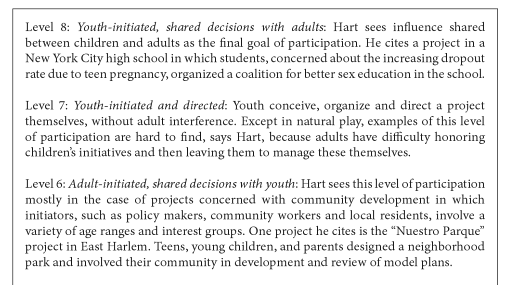
Level 8 (Lazarus, 2012)

Nearly, two decades later, how does this experience reflect and resonate in my classroom? Now that I have been teaching for several years, I have developed a style that is very hands on; my style is almost the opposite of my high school theater teacher. For example, I often base a lesson in a specific learning target that includes a specific acting or performance skill. I Continue reading “Student Empowerment: Sign Two”

Students in a Plural World

Students deserve an education they can easily access. It should be of the highest possible quality, developmentally appropriate, and stretch the learning into proximal development. Student learning happens best across language barriers and ability levels.

John Medina writes on the value of Multimedia presentations. In the book, “Brain Rules (2008)” he cites five rules for multi-media teaching. These rules offer a memory boost to students because they engage the student across language land earning abilities. Their application to Theatre Arts or English Language Arts is immediate and necessary.

Rule One, Multimedia Principle. Application: Have students create maps of their learning. Students learn from words and pictures together. Students should map their knowledge. When they do this they are creating a framework for present knowledge and future knowledge organized into nodes of learning.

Rule Two, Temporal Contiguity Principle. Application: present a concept map or picture that has text integrated into the image. For drama or ELA, this can be done with a storyboard. The storyboard can pre-view the chapter or entire story. The storyboard can include images of major characters and places that they go along with character relationships, such as family relationships.

Rule Three, Spatial Contiguity Principle. Application: Words need to be presented near the image. For a theatre classroom, all the equipment, costumes, and props, can have labels that both help to organize the room and instruct students about what they are as they passively observe the room.

Continue reading “Students in a Plural World”

The Developing Child in Middle School

IMG_1782Jean Piaget was instrumental in positing four stages of human development. These stages can be directly applied to the work of educators. The fourth stage, Formal Operational, generally starts as students enter middle school in sixth grade around the age of eleven. As an educator of middle school students, my experience is primarily limited to beginning of this final stage. To summarize, the previous three stages are sensorimotor, preoperational, and concrete (Smith, 2012).
The Sensorimotor Period is best represented with the prototypical baby and the game of peek-a-boo. In this stage, babies develop the concept of object permanence in addition to learning to control their motor responses as they coordinate the information from all five senses. The Preoperational Period begins at age two and lasts through age seven, young children develop the idea of abstract thinking. This includes symbolic thinking and ego centered thought. The final stage before middle school is The Concrete Operational Period. This stage starts around the age of seven and continues through 11 years old. Here youth develop the ability to apply their intellectual thinking to actual events (Smith 2012).
The development of an individual is greatly influenced by both their natural born genetics and their surrounding environment as they grow up. There are a number of variable factors that can influence this later category. These factors include: the child’s family members (and their beliefs), the geographical location of the child, the quality of the child’s care as they grow up, the school they attend, the media that the child consumes, and the era that the child grows up in. Continue reading “The Developing Child in Middle School”