
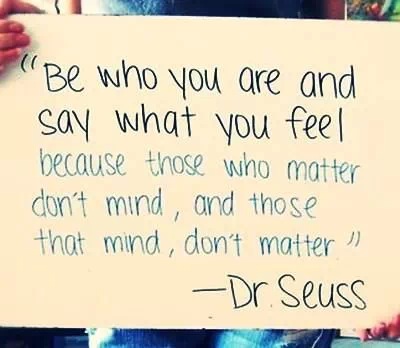
 My Values: There are malleable values that collectively change over time; as Aristotle (Keuss, 2014) posited, the community has shared values derived from the city-state. Most of the values I have adopted from my city-state come from human rights movements, religious freedom, feminism, anti-slavery, workers rights, LGBTQ rights, etc. In general the majority of the human population has agreed (more so with some than others) that these values represented in these movements have cemented principles of right and wrong. In doing so, the historical context has given a code of morals and ethics that I share with my community. Additionally, like Augustine (Keuss, 2014), I have developed my own morals, values, and ethics through inward reflection and my own sense of what is virtuous. Though, this second framework has developed much more significantly in my adult life. Abstract thought and self-reflection are not skills found in children. These are skills that are developed over time.
Following the definition given by Pojman (2014), and given these two aspects in my development as an ethical person, I would put myself into the Pluralist Nonhedonist Camp. There is good in all things. This good is pleasurable. However, pleasure can become self-indulgent and one can seek “higher” virtues such as freedom, community belonging, and love. It seems that my formulation of right and wrong has been established in a nature and nurture relationship. My inner nature both initiates and harmonizes with values that evolve into my moral construct. At the same time, my praxis of ethics and morals comes from my community; my actions are affirmed by their approval.
The Influence of Values on Teaching: A teacher is an agent of the government and must represent the laws of the state and country; neutrality is crucial. Teachers should be fair, cover as many religions as possible, speak from experience, allow students to speak from their personal experience, and stay away from any prescriptions of how to be or what to do. These things should provide fairness to religion and non-religion alike. As Glenn Tinder (2014) suggests in the article “Can We Be Good Without God?” personal dignity disappears when “liberty for all human beings and equality under the law—becomes indefensible.” The classroom is an excellent place for dignity for all, religious and non-religious alike, because ultimately we live in a society with many different viewpoints and I, for one, would like my students to engage the world with respect and liberty. Tinder may call this agape. I call it common sense (E3). Continue reading “Teaching Values: Choices, Influences, Future Choices”
 David Orace Kelly