Comprehensive Theatre: Sign Four

Journal Entry from October 27, 2014 for Theatre Methods

What is…

Lazarus (2012) describes a model of Comprehensive Theatre Education. I strive to create this model in my classroom. I strive to have all students experience all aspects of theatre education. It is through the common experience of acting that I have each of my students also act, direct, design, manage, and research their productions. I also integrate other subjects into my classroom; most recently I have had collaborations with English (in the study of Shakespeare), Art (in the creation of puppets for puppet theatre), Physical Education/Health (in improvisation with Health Topics), and in Music (with creating sound scores for the annual school show). I have Comprehensive Arts Education program. The challenge is, of course, finding the curricular time to accomplish all the goals of a comprehensive program.

Comprehensive Arts Education is defined by three central ideas: a holistic arts education, an interdisciplinary education, and an integrated program. Really, this encapsulates the idea that theatre is every subject. I have told my students for years that they must be scholars if they want to be great actors. It is only through an understanding of academic knowledge of multiple fields that they can bring life to a wide range of characters.

What does this mean for the teacher of theatre arts? Does this mean that I must be an expert in every subject? I do not believe Continue reading “Comprehensive Theatre: Sign Four”
Socially Responsible Practices of Theatre Education: Sign Three

Journal Entry from October 20, 2014 for Theatre Methods

 What is…

At this point I have a decade of experience under my belt in youth theatre. I have a firm grasp on “what is” in my program. This grasp has been continually transforming over the years and has certainly shifted from a more idealistic to a more realistic perspective on what is possible and achievable. Some of the most cumbersome constraints include administrative oversight and school policy, student interests, and limited instructional time.

In my class, as I often describe, I try to create an atmosphere of respect. One benefit of this is that it serves as a backbone for socially responsible actions. We, society, must respect the identities of the people we interact with. We, each individual, must also respect our own history and identity. Too often in theatre, we take licenses to transgress boundaries that are present in society. Sometimes it is very appropriate; it can provoke discussions that allow society to progress. Sometimes, in middle school, the students are not ready to take on those discussions; to cast Romeo and Juliet with two boys, for example, may provoke content that students are not comfortable discussing.

IMG_2248 Continue reading “Socially Responsible Practices of Theatre Education: Sign Three”

Student Empowerment: Sign Two

Journal Entry from October 12, 2014 for Theatre Methods

When I consider the voices in my classroom – the voices that are shared with the performance space, my first thought is that of the playwright. I believe that the actor, in training or professional, has a duty to the words; the actor must bring the text to life. My second thought, as a teacher, is that the voices of my students must be heard. It is their learning experience; if a student can own the work – put their own name on it, there is an incentive to the student for increased ‘buy-in’ to the process. It is exactly this engagement that brings the words of the playwright to life in new ways. My students have the freedom to approach a text with a fresh and empowered perspective. That is why I am in theatre arts – I relish the empowered perspective of a student that demands full participation of each student. This was certainly true of my education; I received a high school theatre training that emphasized my full participation.

Reflecting, specifically on my high school theater experience, my teacher (much beloved) had a style that emphasized projects – often projects that he did not do much or any teaching for. The teaching in his class came after two weeks of practice. Students would present their scene and he would critique for twenty minutes after each scene. Sitting from the back of the theatre, in his bully pulpit, he lectured on the merits and faults of what we presented. He offered little in the way of technique. What he did offer was a drive for his approval. As far as I was concerned, my theatre teacher was the guru of art. For an angst-ridden teen this was exactly what drove my passion for theatre. Getting the approval of my theatre teacher was more valuable than gold.

Screen Shot 2014-10-09 at 7.57.01 PM
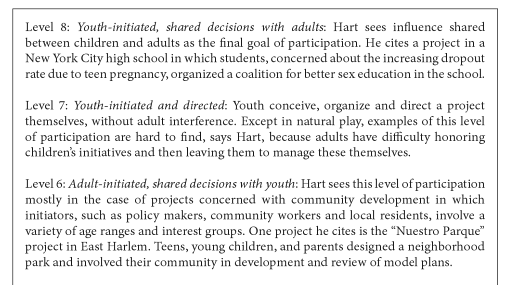
Level 8 (Lazarus, 2012)

Nearly, two decades later, how does this experience reflect and resonate in my classroom? Now that I have been teaching for several years, I have developed a style that is very hands on; my style is almost the opposite of my high school theater teacher. For example, I often base a lesson in a specific learning target that includes a specific acting or performance skill. I Continue reading “Student Empowerment: Sign Two”

Theatre Changes: Sign One

Journal Entry from October 5, 2014 for Theatre Methods

IMG_2406On the theme of reflection and change, Lazarus (2012) proposes a series of questions to engage with Appreciative Inquiry. The first question: what is it that has changed in the last year of my teaching; what has stayed the same? The simplest of my answers, I have enrolled in graduate school, MAT and certification. After seven years of developing my middle school drama program and ten years of teaching youth theatre, I have chosen to take this climactic step so that I can change my practice of teaching: in doing so it is my hope to become a better teacher with increased efficacy, increased student impact, and increased knowledge regarding the implementation of best practices.

This does not mean that I have lacked impact over my teaching career. I have had Continue reading “Theatre Changes: Sign One”